What are the best online marketing tools for small businesses in 2026?
Most small businesses end up paying for five or six different tools to do what should be one job: getting your product in front of the right people and making it easy for them to buy. The best online marketing tools for small businesses in 2026 are not the most complex ones. They are the ones that do more for less. Nas.com replaces the whole stack with a single platform, so you can stop managing software and start growing.
How many tools are you currently paying for to run your marketing? Three? Five? More? Let me guess. You signed up for a store builder. Then a photo tool. An email platform after that. Then someone told you about Meta ads, so you hired someone to run them. Six months later you are paying hundreds of dollars a month across five different dashboards, and your actual sales have barely moved. Now ask yourself honestly: is any of it actually working?
The problem is not that good online marketing tools for small businesses do not exist. The problem is that most guides on marketing ideas for small business treat the subject as a shopping list rather than a strategy. Finding the best marketing tools for small business owners should start with a different question: not which tools are popular, but which problems you actually need to solve.
5 digital tools you need for small business marketing in 2026
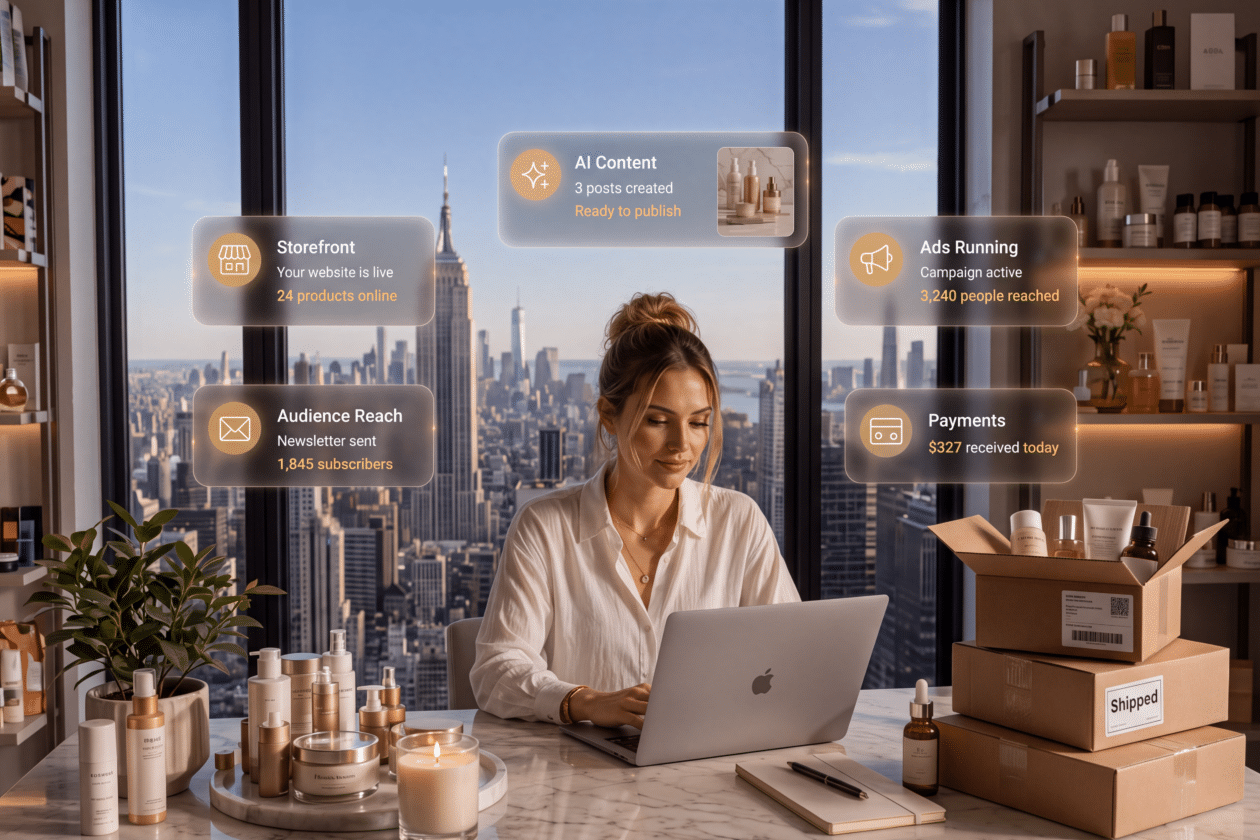
The reality of small business internet marketing in 2026 is that most sellers do not need a complicated stack or an agency on retainer. They need five things: a place to sell, a way to create content, a system to run ads, a channel to reach their audience, and a reliable way to take payment. For a long time, buying those five things separately was the only option. That is no longer the case.
This guide covers the essential digital tools for small business marketing in 2026, what those tools typically cost when purchased separately, and why a growing number of solo sellers are replacing their entire setup with a single platform instead. It is also a practical answer to the question every seller eventually asks: which marketing tool for small business use actually does enough to justify its cost on its own?
The Real CostWhat the typical small business marketing stack actually costs
Most small business marketing strategies are built the same way. A seller launches a store on a platform that handles checkout and product listings. They then sort out photography: either hiring a freelance photographer for product shoots or subscribing to a design tool to create social content themselves. After that comes email marketing, because social media algorithms are unreliable and sellers need a direct line to their customers. Then come the ads, and that is where costs escalate most sharply.

Why paid ads are where costs spiral
Running paid campaigns on Facebook and Instagram the conventional way means setting up a Meta Business Manager account, installing a tracking pixel, configuring Events Manager, producing ad creatives, and then actively managing and optimising campaigns over time. Most sellers give up before they spend a single dollar on ad budget. Those who persist often hand the whole process over to an agency or freelancer, which typically costs several hundred to several thousand dollars per month in management fees alone, before any actual ad spend.
In practice, assembling a complete set of digital marketing tools for small businesses means paying several separate companies at once. A typical stack looks something like this:
| Tool category | What it does | Typical monthly cost |
|---|---|---|
| Online store builder | Sell products, handle checkout | $39+/mo |
| Product photography / content design | Product images, social posts, ad creatives | $50–$500+/mo |
| Email marketing platform | Reach customers directly via email | $20–$350+/mo |
| Meta ads agency or freelancer | Facebook and Instagram campaign management | $500–$3,000+/mo |
| Payment processing | Accept payments online | ~2.9% + $0.30 per transaction |
| Total before ad spend | $609–$3,889+/mo |
That figure does not include the actual money spent on ads, which comes on top. It also does not account for the time spent managing multiple dashboards, chasing invoices, or troubleshooting integrations between tools that were not designed to work together. For many small businesses, the overhead of running a marketing stack is itself a significant operational burden.
💡 Already using Shopify? If you are comparing platforms and want a detailed side-by-side look at fees, features, and which setup suits different types of sellers, our Nas.com vs Shopify comparison covers it in full. You can also see how Nas.com stacks up against a broader range of platforms in our Nas vs Shopify vs Etsy vs TikTok Shop guide.
Choosing Online Marketing Tools for Small Businesses: What to Actually Look For
The online marketing tools for small businesses that actually make a difference are rarely the most complex ones. Understanding which tools deliver real value means being clear about which problems you are actually trying to solve, rather than which tools everyone else seems to be using. In practice, most small businesses share five core marketing needs.
A professional website or storefront
A place to sell that looks credible, loads fast, and converts visitors into buyers on both desktop and mobile.
Content that converts
Product photography, ad creatives, and social media posts that look polished. Customers compare products visually before they read a single word.
Paid advertising
The ability to reach new customers on Facebook and Instagram without needing technical expertise or a dedicated media buyer.
Direct audience communication
A way to message your customers through channels you own and control, rather than relying on an algorithm to surface your content.
Reliable payments
A checkout that works across markets, settles quickly, and does not quietly take a larger percentage of your revenue than you expected.
These five pillars are the foundation of an effective online marketing strategy for small businesses. In 2026, you no longer need to buy them from five separate companies.
 The Platform
Nas.com: one platform, five marketing jobs
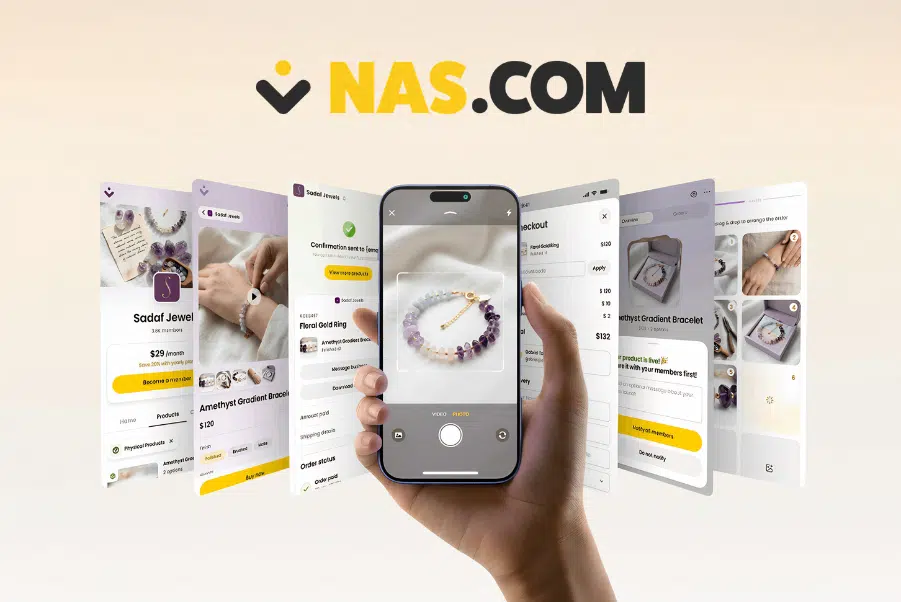
Nas.com is an AI-powered platform built for solo sellers. Whether you sell handmade jewellery, run fitness classes, offer coaching sessions, ship physical goods, or sell digital products and courses, the platform handles the marketing infrastructure so you can focus on the work itself. More than 350,000 entrepreneurs have built businesses on the platform, across more than 190 countries.
The five online marketing tools for small businesses built into Nas.com directly replace the stack described earlier in this guide. The sections below cover each one in detail.
Feature 1Storefront: your store built from one photo
Most online store builders ask you to do the work. You choose a theme, upload your products one by one, write descriptions, arrange your layout, configure your checkout, and eventually hit publish after several hours, or sometimes several days, of setup. Nas.com works the other way around.
Upload a single photo of your product, or a photo of yourself if you sell a service or run sessions, and the platform builds your store around it. The layout, the product imagery, and the professional presentation are all generated automatically.
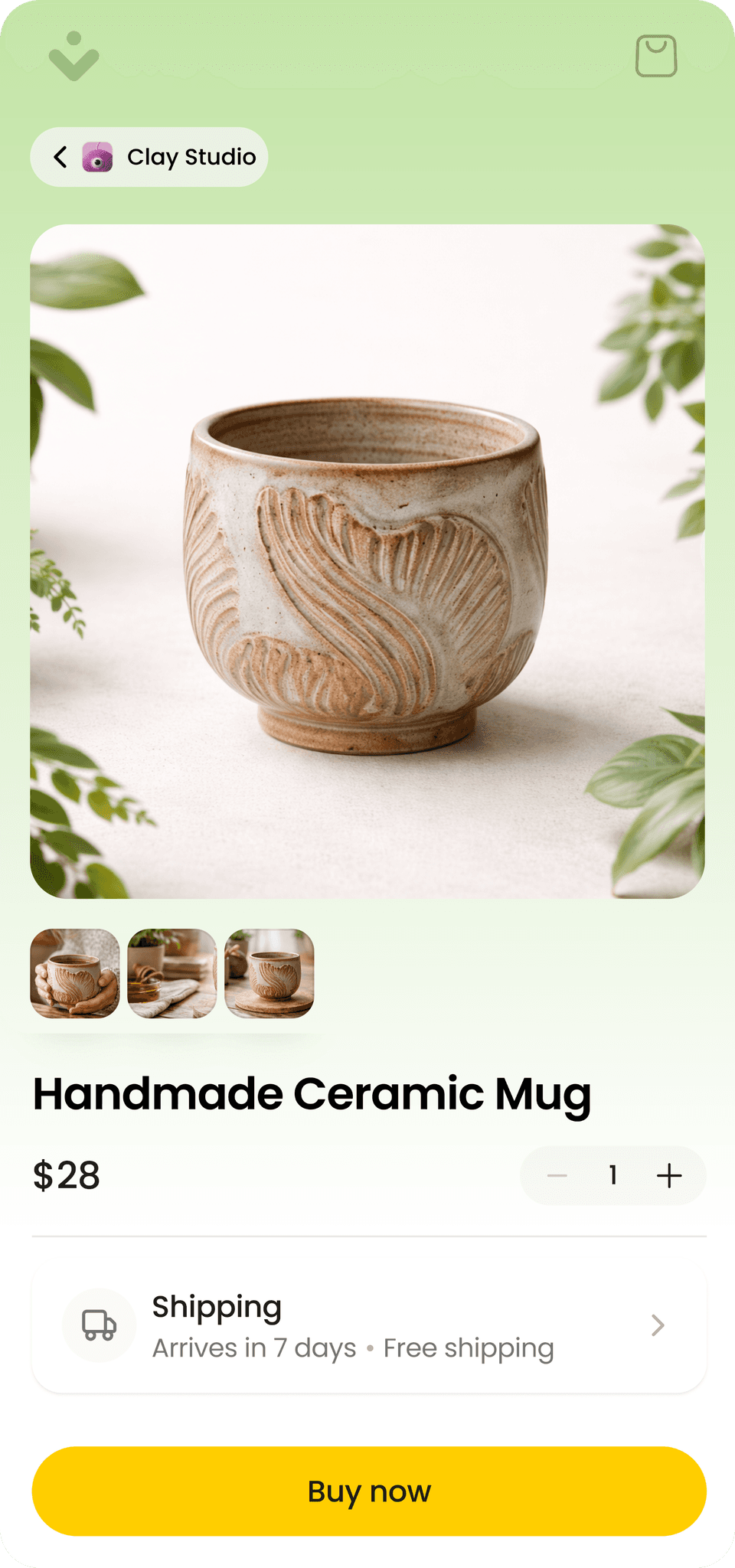
Physical Product
Snap your product. The AI creates multiple lifestyle and studio shots automatically, placing it in professional environments with clean backgrounds and appropriate lighting.
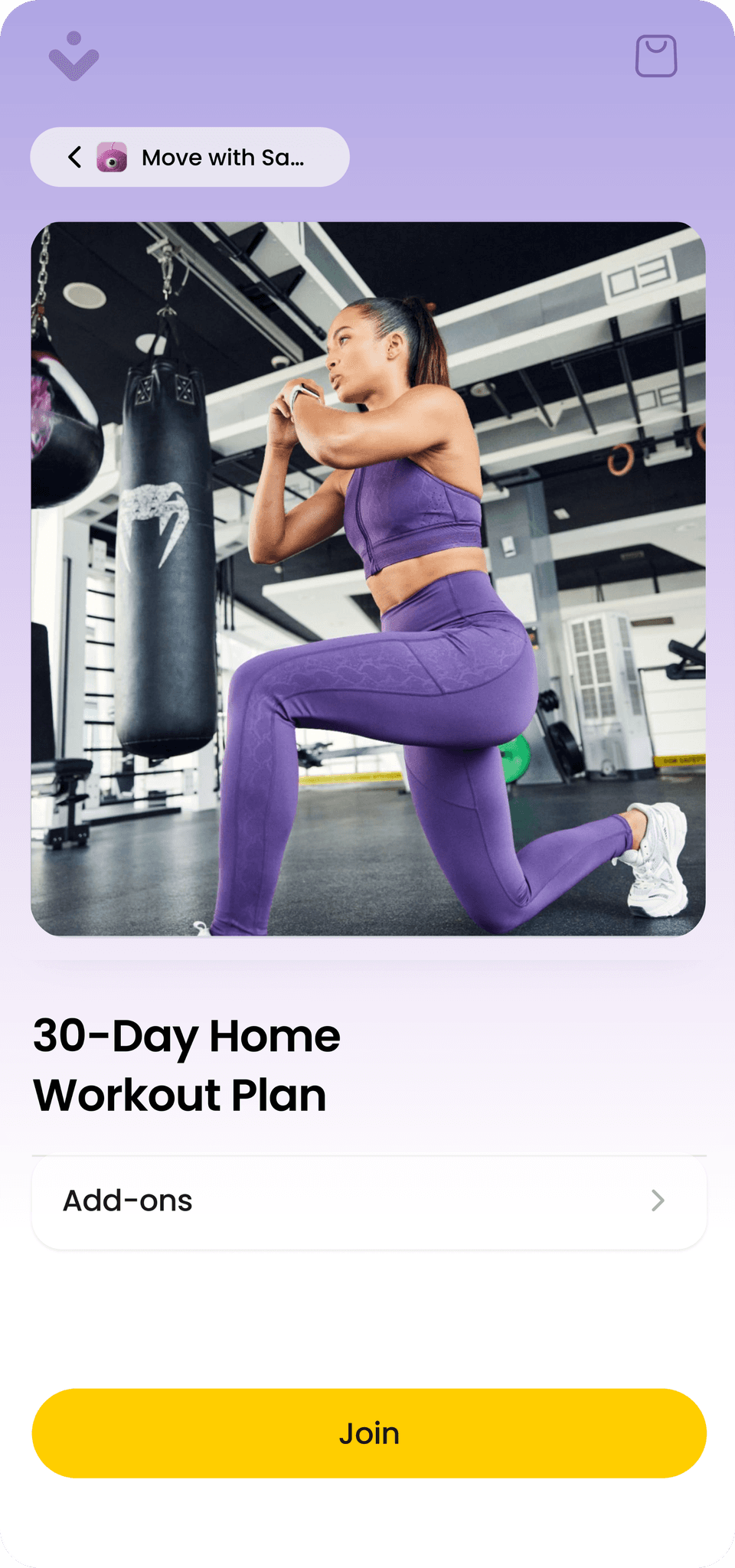
Digital / Service
You are the product. Snap a photo of your face and the AI builds a store around your personal brand and expertise.
The result is a high-converting storefront that you fully control, with secure checkout and customer data built in, ready in minutes rather than days. As Nas.com puts it directly on the Storefront page: Shopify gives you the tools to build a store. Nas.com builds it for you. That distinction matters when your time is the most limited resource you have.
💡 Good to know: The Storefront works for both physical and digital products. If you sell something you know, something you make, or something you love, the same setup process applies. There is no separate configuration required for different product types.
Magic Content: studio-quality content marketing, no creative team needed
Content marketing for small businesses has traditionally required one of two things: a budget for professional photography and design, or a significant amount of personal time spent in design tools trying to produce something that looks credible. Magic Content removes both constraints.
From a single phone photo of your product, Magic Content generates studio-quality product photography placed in professional studio environments, lifestyle scenes, and clean backgrounds. It also produces photo-quality ad creatives ready to run on Facebook and Instagram, as well as ready-to-post images sized and formatted for Instagram feed, Stories, and TikTok. All of this happens from one prompt, in seconds.
The practical implication is significant. Hiring a freelance photographer typically costs $200 to $500 per shoot, and that does not include design work or resizing content for different platforms. Magic Content replaces all of that. Furthermore, because every piece of content is generated from the same original photo, your brand looks consistent across your store, your ads, and your social channels without any additional effort to coordinate visual identity across tools.
You do not need a photographer, a studio, or a graphic designer. You need one sentence and Nas.com. Among the best content marketing tools for small businesses, the ones that generate and distribute content from a single source tend to perform best, because visual consistency across your store, your ads, and your social channels builds brand recognition without requiring additional effort to coordinate.
Magic Ads: run Meta campaigns without an agency
Paid advertising is where most sellers’ small business marketing strategy breaks down. Setting up Facebook and Instagram campaigns the conventional way requires installing a Meta Pixel, configuring a Business Manager account, setting up Events Manager, building ad creatives in a separate tool, and then actively managing and testing campaigns over time. The Nas.com Magic Ads page describes this reality bluntly: most sellers give up before they spend a single dollar.
Magic Ads eliminates every one of those steps. The process is literally three clicks, no prior advertising experience needed:
1. Build your creatives
Describe your product and who you want to reach in one sentence. The AI generates professional, photo-quality ad creatives from that prompt instantly.
2. Set audience and budget
Tell us who you want to reach and your daily budget. Those are the only two decisions you need to make.
3. Launch
Nas.com connects directly to Meta, so your campaign goes live on Facebook and Instagram without a pixel or a Business Manager account. Results appear in your dashboard in real time.
To put the results in context: sellers on the platform have reported an 8.4x return on ad spend from a $500 campaign over 14 days, 12x ROAS from $200 over 7 days, and 6.2x ROAS from $300 over 10 days. Individual outcomes will naturally vary, but the point is that this level of performance is now accessible without agency fees or specialist expertise.
Magic Ads is available on the Pro plan at a 10% campaign fee, or on the Platinum plan at a reduced 5% campaign fee. For context, most digital marketing agencies charge a management fee of several hundred dollars per month before a single dollar of ad spend is placed. The campaign fee model means you only pay when you are actively running ads.
Magic Reach: own your audience across every channel
One of the most overlooked risks in online marketing for small businesses is audience dependency. Social media platforms are powerful distribution channels, but your ability to reach your audience on them depends entirely on an algorithm you do not control. When a platform changes its feed ranking, or when engagement drops, your reach drops with it. If the platform were to disappear entirely, your ability to contact your customers disappears too.
Magic Reach addresses this directly. It is a multichannel messaging tool that lets you write a message once and deliver it simultaneously across email, app push notifications, your feed, and WhatsApp Direct Messages. Critically, you also build and own the contact list, which means your audience belongs to you regardless of what happens on any individual platform.

Traditional email marketing software is complicated and designed for large companies. Magic Reach works the other way: write your message, click send, and the platform handles delivery across every channel. For small businesses currently paying a separate email marketing subscription while still struggling with low open rates, this is a meaningful consolidation. Your audience receives your message through whatever channel they are most likely to open, rather than only through the one channel you happen to be paying for.
💡 On audience ownership: Capturing a customer’s contact information at the point of purchase or sign-up is one of the highest-value actions a small business can take. Magic Reach makes direct outreach across multiple channels possible from that same contact list, reducing platform dependency over time.
Payments: get paid globally, keep more of what you earn
Payments are often the least glamorous part of a small business marketing stack, but they are also the part where hidden costs accumulate most quietly. Platform fees, transaction cuts, and delayed payouts reduce effective revenue without always being clearly communicated upfront.
Nas.com’s payment infrastructure is built around a straightforward principle. For physical product sales, Nas.com charges 0% in platform fees. The only fee is the payment gateway fee, which goes directly to your payment processor, not to Nas.com. For digital products, the platform fee is 4.9% on the Basic plan, 2.9% on Pro, and 1% on Platinum. This is worth understanding clearly before you choose a plan, particularly if your business is primarily digital.
Local payment methods, payouts, and fraud protection
Checkout works in 190+ countries and accepts Visa, Mastercard, Amex, debit cards, and Apple Pay. Importantly, the platform also supports a wide range of local payment methods by country: Pix and Boleto in Brazil, UPI in India, GCash and Maya in the Philippines, OXXO and Mercado Pago in Mexico, PSE and Efecty in Colombia, and more. For sellers focused on specific regions, effective local marketing tools for small businesses extend beyond advertising: they reach all the way to checkout, where familiar local payment options can significantly improve conversion rates in markets that do not rely on card payments.
Choose your payout rhythm
Payouts follow a bi-weekly schedule on Basic and Pro. Platinum sellers, however, can withdraw earnings on demand, meaning there is no waiting period at all. Built-in fraud detection handles stolen card attempts automatically, so you do not lose inventory or need to manage chargebacks manually. Buyer protection is also included as standard, which builds customer confidence without any additional setup on your part.
Share your customized link and get paid
Nas.com also includes a feature called Zero Link, which lets you collect payments instantly without any product setup required. Share a customised link and get paid directly. They are fast, flexible, and ideal for services, donations, custom offers, or one-time payments. You can choose to absorb the fees yourself or pass them on to your customers, giving you full control over how you price. Fees vary by region, plan, and payment method.
| Fee type | Nas.com | Shopify | Etsy |
|---|---|---|---|
| Platform / transaction fee (physical) | 0% | 0.5–2% | 6.5% |
| Platform fee (digital products) | 4.9% / 2.9% / 1% | 0.5–2% | 6.5% |
| Listing fee per product | $0 | $0 | $0.20 |
| Payment processing fee | Gateway rate only | 2.9% + $0.30 | 3–4% |
Online Marketing Tools for Small Businesses: Nas.com Plans and Pricing
Nas.com offers three plans, all with a 7-day free trial. For sellers evaluating online marketing packages for small business use that consolidate tools rather than add to a stack, and specifically looking for marketing packages for small business owners that cover content, ads, and payments in one place, here is what each plan includes:
| Plan | Price | Key marketing tools included |
|---|---|---|
| Basic | $9/mo | Storefront, Magic Content (2 AI credits/mo), global payments, 0% Nas fee on physical products, 4.9% on digital, up to 5 products, bi-weekly payouts |
| Pro | $29/mo | Everything in Basic + Magic Ads (10% campaign fee), Magic Reach, unlimited products, 5 AI credits/mo, 2.9% Nas fee on digital, verified seller badge, bi-weekly payouts |
| Platinum | $99/mo | Everything in Pro + Magic Ads at 5% campaign fee, on-demand payouts, built-in affiliate tools, 10 AI credits/mo, 1% Nas fee on digital, priority support |
For sellers who are primarily running paid social campaigns, the Pro plan is the natural starting point since it includes Magic Ads. Platinum makes most sense for sellers with higher ad spend, because the reduced campaign fee from 10% to 5% creates meaningful savings as volume grows. You can review the full breakdown, including all fee details, at nas.com/pricing.
Your business, your rulesWho is Nas.com for?
Nas.com is built for anyone who sells what they know, what they make, or what they love. The platform is not limited to a single type of seller or product category. In practice, that means it works across three broad groups.
Sell what you know
Courses, coaching sessions, 1:1 consultations, templates, challenges, and digital downloads. If your expertise is the product, Nas.com builds the store around your personal brand from a single photo.
Sell what you make
Handmade jewellery, apparel, ceramics, home decor, candles, and other physical goods. The Storefront and Magic Content tools are particularly well-suited to product-based businesses where photography matters most.
Sell what you love
Fitness classes, dance classes, events, networking nights, paid communities, and experiences. Nas.com handles bookings, payments, and audience messaging for sellers whose product is time and access.
In each case, the marketing tools work the same way. Your Storefront adapts to the product type, Magic Content generates the appropriate visual assets, Magic Ads drives paid traffic, Magic Reach keeps the audience engaged, and Payments handles global checkout. No separate configuration is required to fit into a single category.
Do you actually need a marketing agency?
For most small businesses and solo sellers, the honest answer is no. The best online marketing tools for small businesses in 2026 handle the core functions an agency would otherwise manage: content production, Meta ad campaigns, audience messaging, and performance tracking. A marketing agency makes sense when volume and complexity exceed what a single person or platform can manage. However, for the majority of small businesses, that threshold is considerably higher than it might appear.
What changes when the tools are built in
The core functions of a small business marketing agency, including content production, Meta ad management, audience messaging, and performance tracking, are now handled by AI-powered tools that do not require a retainer, a briefing process, or a monthly fee that scales with your success. Magic Ads in particular removes the single biggest barrier to running paid campaigns: the technical setup. By connecting directly to Meta and handling creative generation automatically, it puts campaign management within reach of any seller regardless of prior experience.
Furthermore, an agency manages your marketing on your behalf. The tools on Nas.com give you direct control. You see results in real time, you adjust spend when you want to, and you own the audience data. That is a fundamentally different kind of relationship with your own marketing, and for most small businesses it is the more valuable one.
Therefore, if you are currently paying for a tool stack of five or more subscriptions, or if you are considering hiring an agency to manage digital marketing, it is worth running a 7-day free trial on Nas.com first. The platform is designed to replace the stack, not sit alongside it. For a broader look at how Nas.com compares against other platforms before you decide, see our full platform comparison guide.
Stop paying for tools that only do one job.
Run your entire marketing from one place.
Storefront, content, ads, messaging, and payments, all built in and ready to go on day one.
Start Free on Nas.com →Frequently asked questions
About online marketing tools for small businesses
What is the most important online marketing tool for a small business?
The most effective online marketing tools for small businesses are the ones that cover the most ground at once. There is no single most important tool because effective marketing requires several things working together: a professional storefront, content, advertising, audience communication, and payments. However, if you are starting from scratch, a storefront that converts visitors is the foundation everything else builds on. Without a credible place to send traffic, advertising and content have nowhere to land.
What are the main benefits of digital marketing for small businesses?
Digital marketing gives small businesses access to precisely targeted audiences at a fraction of what traditional advertising costs. Results are measurable in real time, so you can see what is working and adjust quickly. AI tools have also substantially lowered the barrier to entry: content creation, ad management, and multichannel messaging are all accessible without specialist staff or large budgets. The key benefit, however, is that digital marketing lets small businesses compete for the same customers as much larger companies, on the basis of relevance and quality rather than budget alone.
Budgeting and tool comparisons
Are there free online marketing tools for small businesses?
Many sellers start out searching for free marketing tools for small businesses, and while individual free tiers do exist across various platforms, they typically come with significant limitations on features, usage, or the number of contacts you can reach. A more practical option for sellers who want to try a full platform without committing is Nas.com’s 7-day free trial, which gives access to the Storefront, Magic Content, and payment features before any plan charges apply.
How much should a small business spend on online marketing tools?
As a rough benchmark, many small businesses spend between 7% and 12% of revenue on marketing, though this varies considerably by industry and growth stage. More practically, the goal is to get the most impact per dollar spent. When evaluating online marketing tools for small businesses, consolidating onto one platform rather than maintaining five or six separate subscriptions is one of the most straightforward ways to reduce marketing overhead without reducing output.
What is the difference between social media marketing tools for small business and content marketing tools?
Social media marketing tools are primarily designed to schedule, publish, and track content across social platforms like Instagram, TikTok, and Facebook. Content marketing tools, by contrast, focus on creating the content itself: writing, design, photography, and video production. In practice, most small businesses need both, which is why platforms that combine content generation and distribution in one place, as Magic Content does, tend to be more efficient than managing a separate tool for each function.
About Nas.com
Does Nas.com charge transaction fees on sales?
Nas.com charges 0% platform fees on physical product sales. The only fee you pay on physical sales is the payment gateway fee, which goes directly to your payment processor, not to Nas.com. For digital products, the Nas.com platform fee is 4.9% on the Basic plan, 2.9% on Pro, and 1% on Platinum. All plans also include standard payment gateway processing fees, which vary by country and provider.
Can I run Meta ads on Nas.com without prior experience?
Yes. Magic Ads is specifically designed for sellers with no prior advertising experience. You do not need a Meta Pixel, a Business Manager account, or any knowledge of Facebook Events Manager. The process is three steps: describe your product and target audience, set your budget, and launch. Nas.com handles the Meta connection directly. Magic Ads is available on the Pro plan ($29/mo) at a 10% campaign fee, and on Platinum ($99/mo) at a 5% campaign fee.
Payments, product types, and messaging
What payment methods does Nas.com support?
Nas.com supports Visa, Mastercard, Amex, all major debit networks, and Apple Pay (in the US, UAE, Israel, and Singapore). Beyond card payments, the platform supports a wide range of local payment methods by country, including Pix and Boleto in Brazil, UPI in India, GCash and Maya in the Philippines, OXXO and Mercado Pago in Mexico, and PSE and Efecty in Colombia, among others. Checkout works in 190+ countries in total.
Is Nas.com only for digital products?
No. Nas.com is built for sellers across every product type: physical goods, digital products, services, coaching, events, and community memberships. The Storefront, Magic Content, and Payments features are all designed to work equally well for physical product sellers, with specific features like AI product photography and local payment methods directly serving sellers with tangible goods.
How does Magic Reach differ from a standard email marketing platform?
Standard email marketing platforms send messages through a single channel and typically require list management, segmentation setup, and design work to produce professional-looking campaigns. Magic Reach delivers a single message across multiple channels simultaneously, including email, app push notifications, your feed, and WhatsApp Direct Messages. It is also significantly simpler to use: write your message, click send, and the platform handles the rest. The audience list is owned by you and builds over time, reducing dependence on any individual channel or platform.