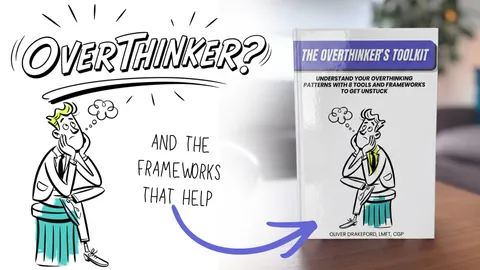
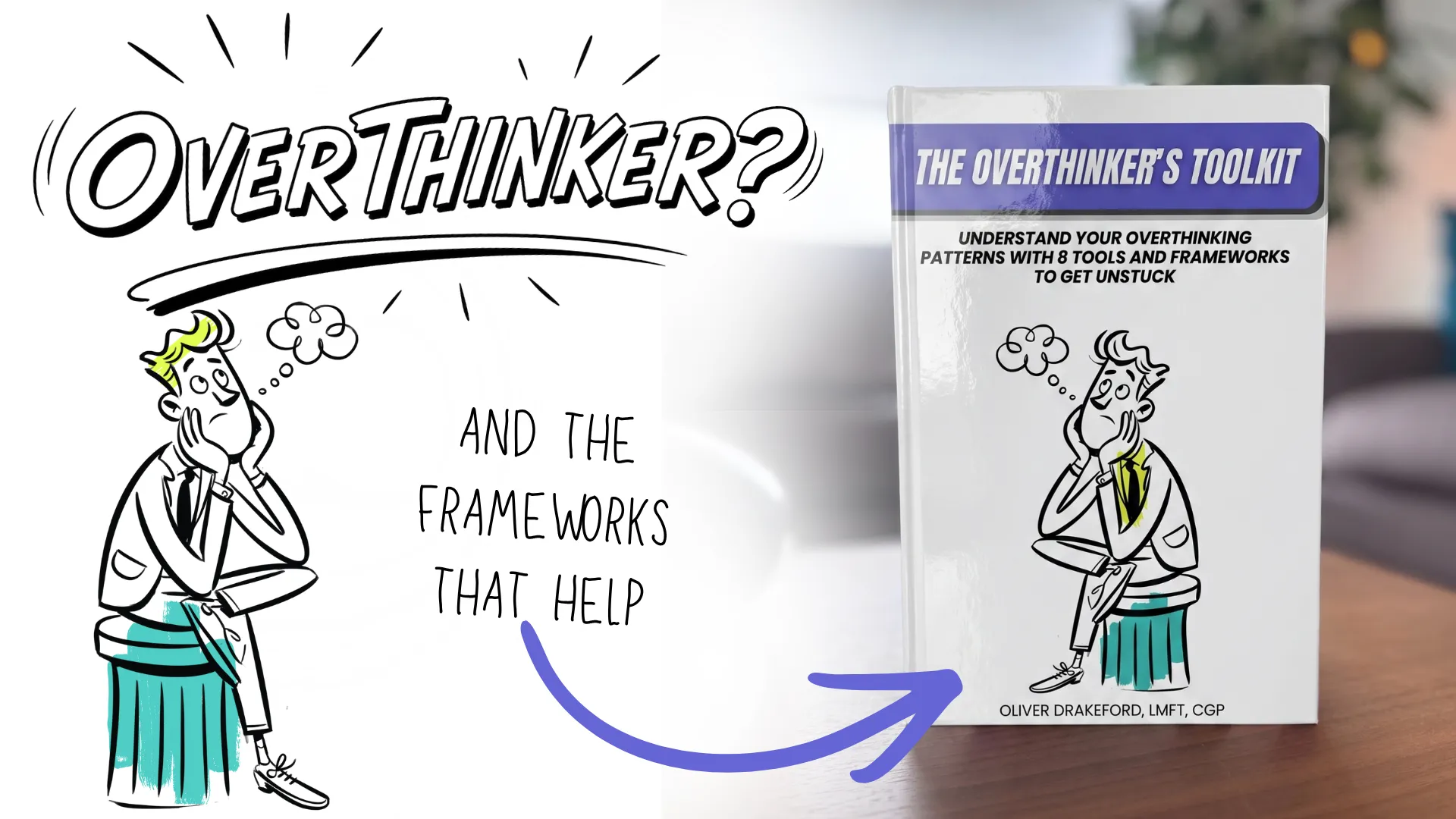
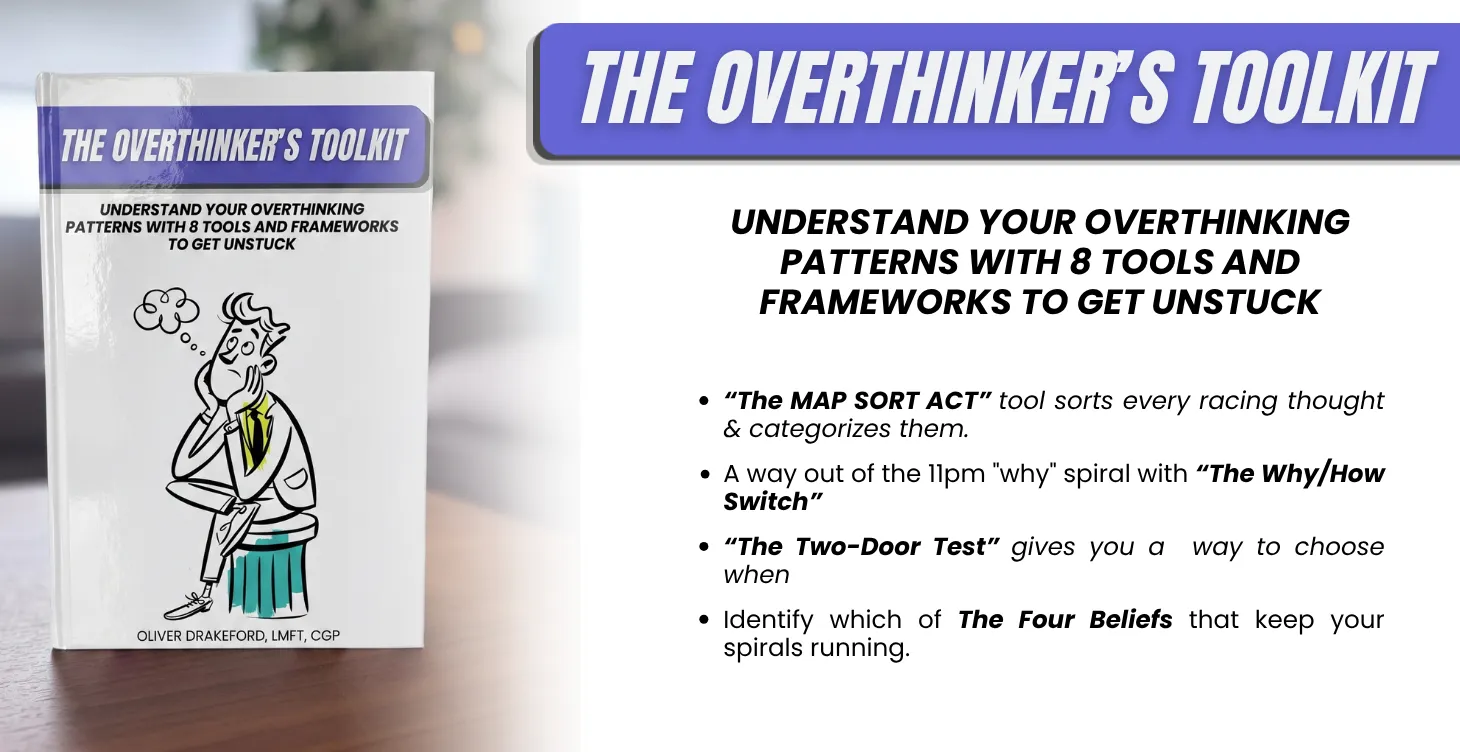
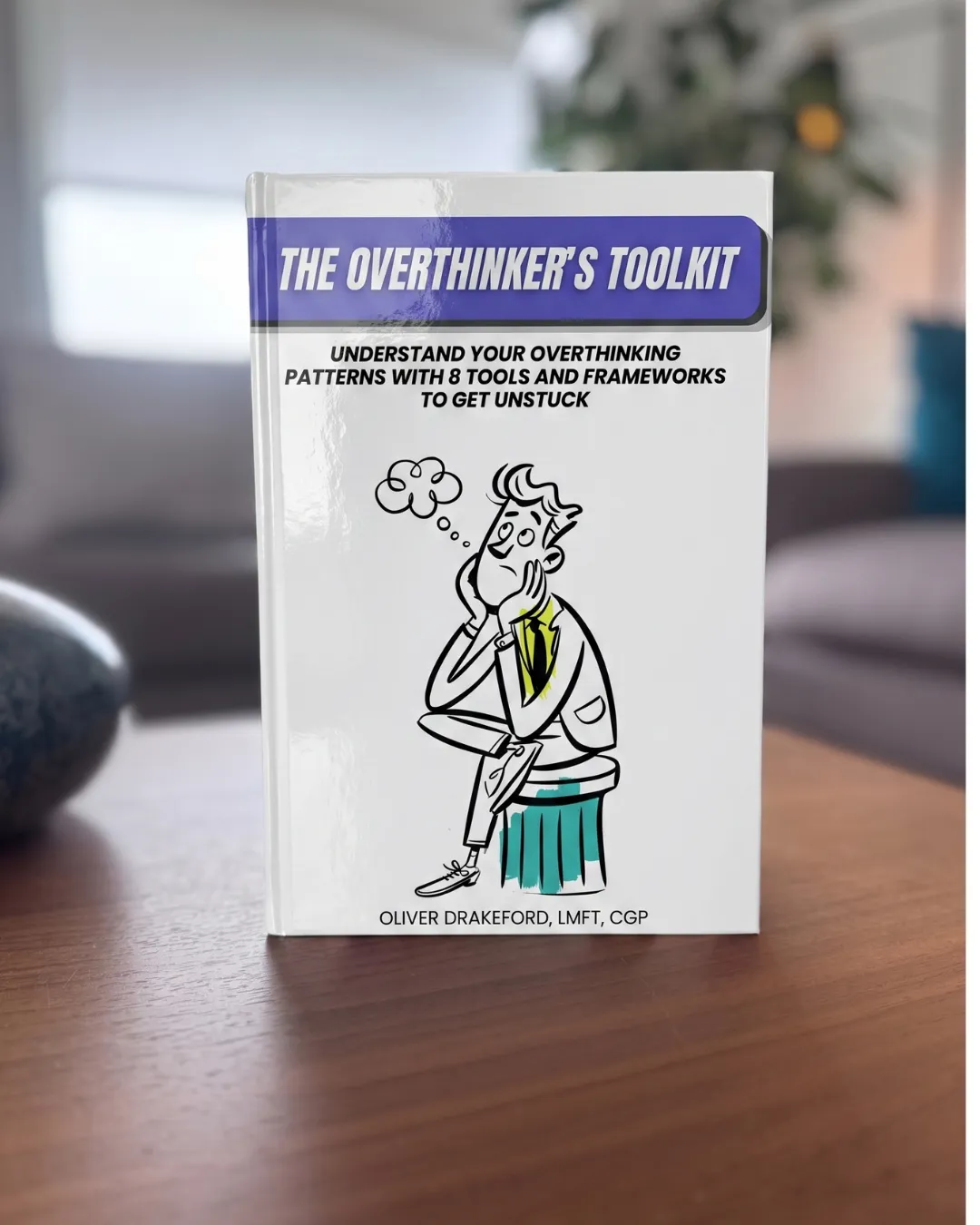
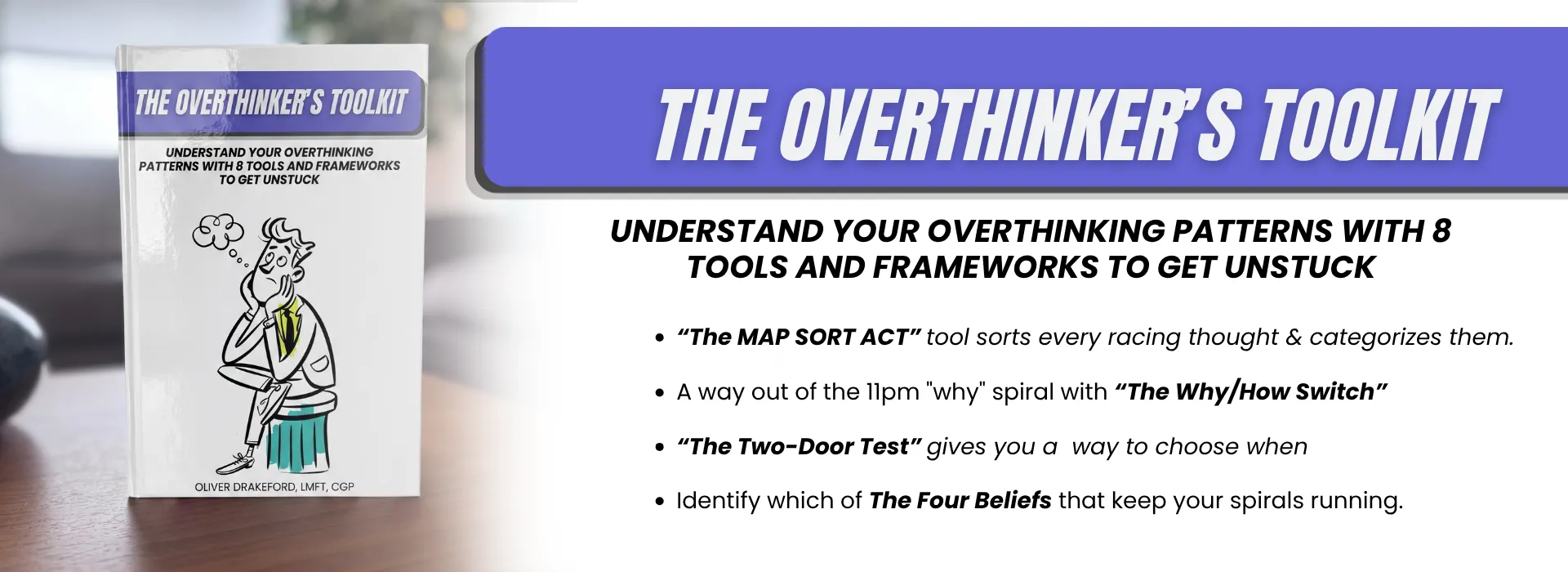
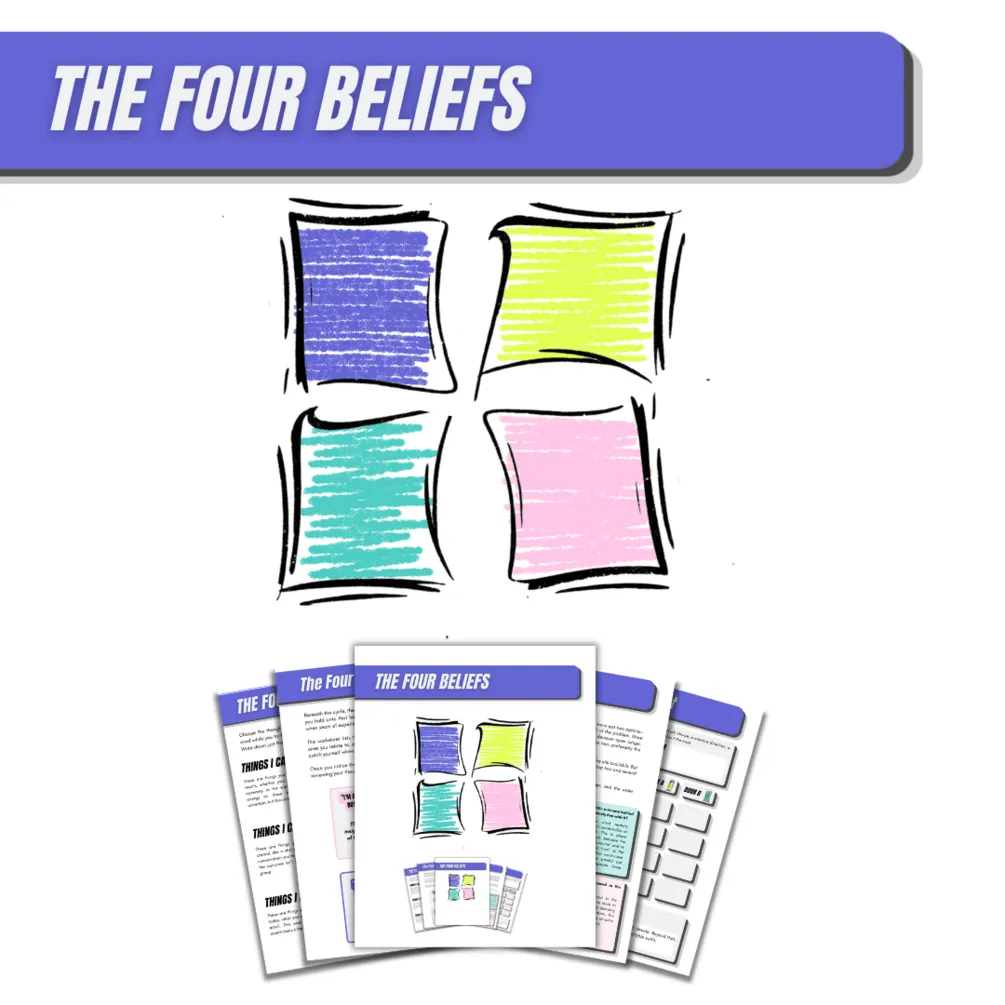
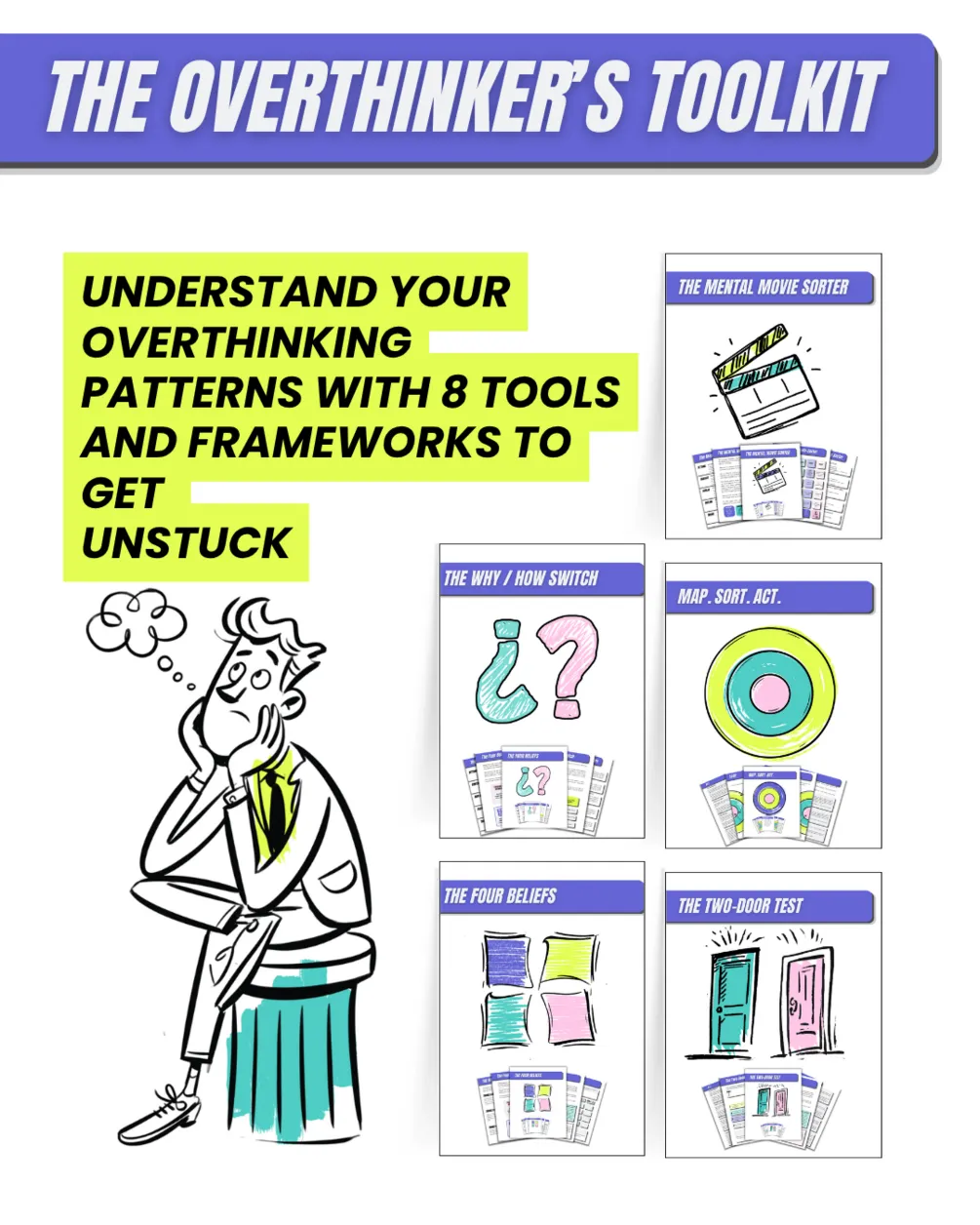
The Overthinker's Toolkit PDF: A Field Guide for the Brain That Won't Switch Off
Description
For the mind that is so exceptional at thinking, it's become problem.
The loop that keeps you spinning isn't a flaw in your design. It's a survival feature, now misfiring on your inbox, your decisions, and whatever you said in that meeting last Tuesday.
As a Licensed Marriage and Family Therapist, I've been helping people who struggle with overthinking, anxiety and rumination for a decade and collected some of the tools and strategies I share with clients into this workbook.
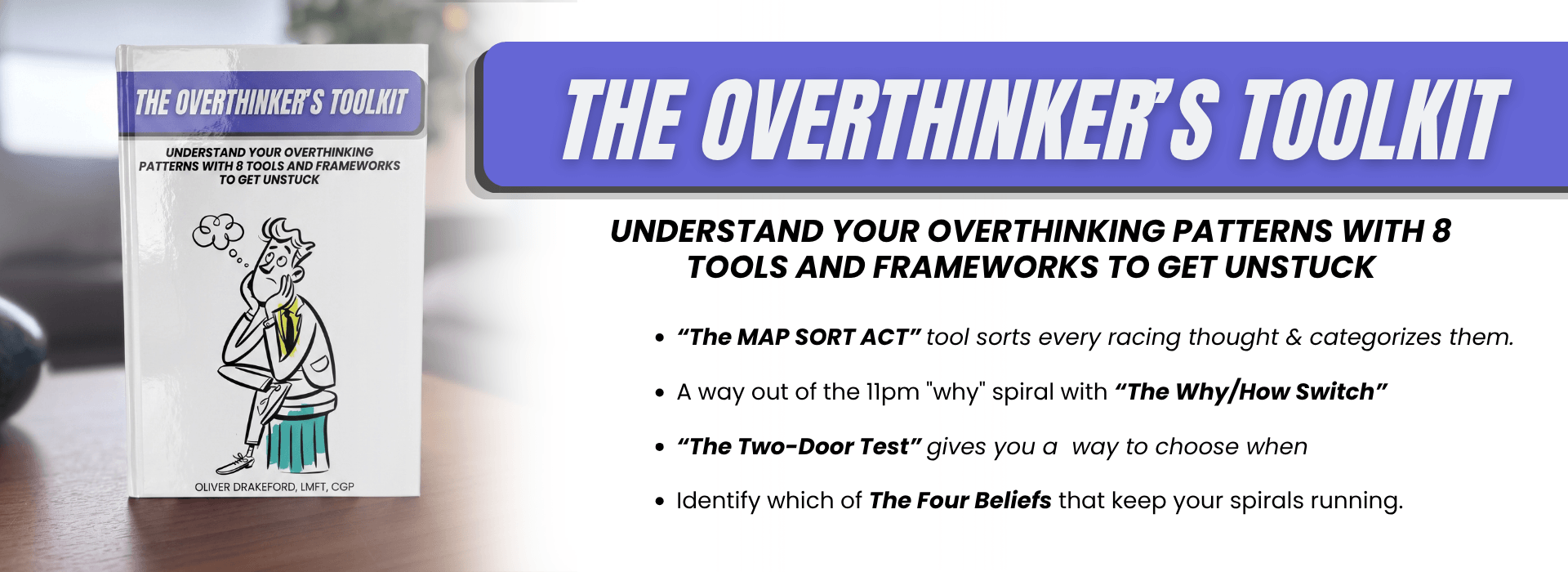
Thinking harder won't break the cycle - but understanding what's actually driving it will.
Every hour you spend spinning in your head is an hour you're not spending on the thing that actually matters.
Overthinking has a cost, in decisions delayed, opportunities avoided, and energy burned on problems that can't be solved by thinking about them harder. This toolkit gives you eleven frameworks to identify what kind of loop you're running, sort what's worth your attention from what isn't, and move.
Some of the tools are:
The Mental Movie Sorter:
Most advice on overthinking treats four different mental loops as if they were one. Worry, overthinking, rumination, reflection feel identical from the inside. They are not. If you can't tell them apart, every tool you try is the wrong tool for the job at least seventy-five percent of the time. The Mental Movie Sorter sorts you into the right one in about five minutes.
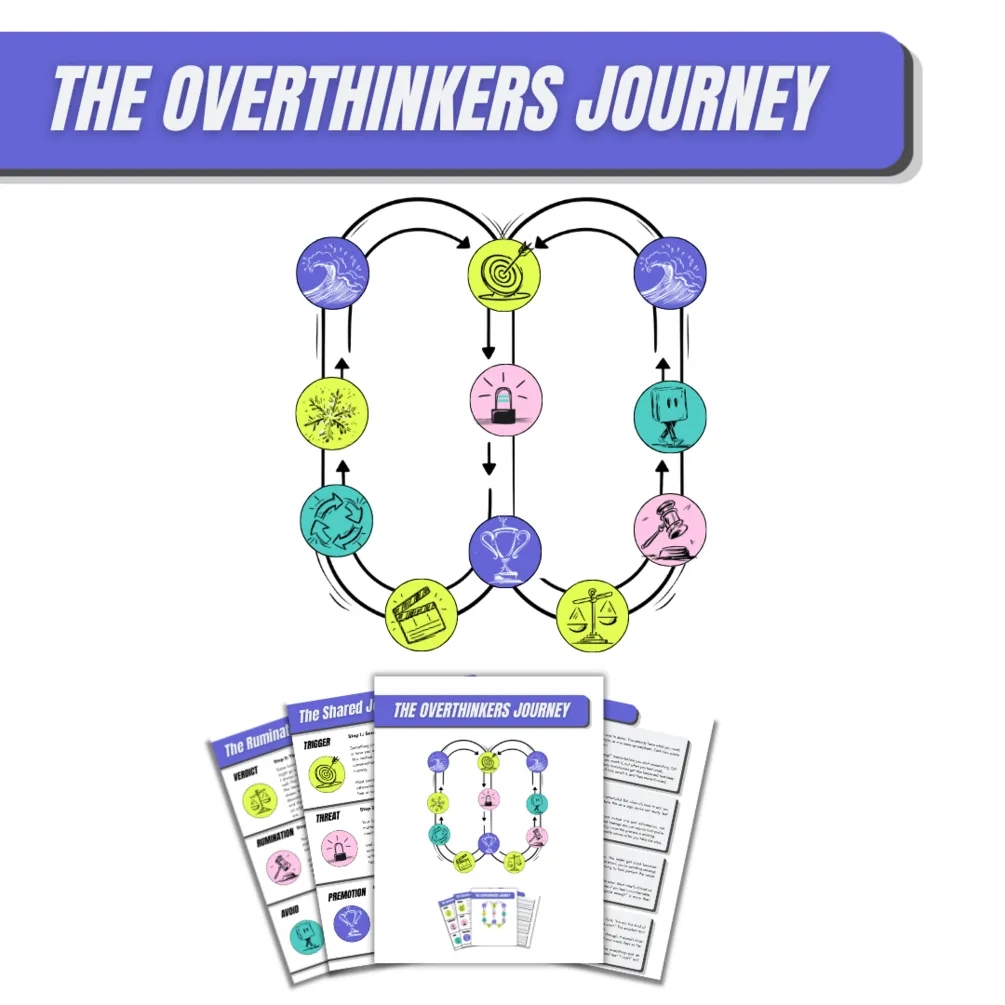
The Overthinker's Journey
The Overthinker's Journey Map and the Ruminator's Journey Map plot the path the brain takes from a small unknown, through threat estimate, into the loop, and out via the brief relief that keeps the whole pattern running. It's an essential tool for spotting where you tend to enter and where you tend to get stuck.
The Why/How Switch:
One of the most important ways to interrupt the overthinking loop, is probably one your therapist has suggested but never fully explained . It's the difference between 'why' and 'how' questions, but laid out so you can use it at 11pm on a Tuesday when you're not actually in a session.
The Two-Door Test
The Two-Door Test is a worksheet for the choice you've been turning over and over. Pick the two options you keep returning to and run them through four specific questions, including which way you'd lean if forced to commit right now, and what it costs you to keep standing in between.
MAP SORT ACT
MAP SORT ACT is a paper exercise for the moments when fifteen thoughts feel urgent and equally weighted. It walks you through sorting them by what you can control, influence, or not control — and offers a clear next move for each.